- Pharmaceutical wastewater contains a highly toxic cocktail of active pharmaceutical ingredients (APIs), heavy metals, and pathogens that conventional treatment systems fail to remove.
- Inadequate treatment drives the rapid development of antimicrobial resistance (AMR), with ETP isolates showing alarming resistance rates to common antibiotics.
- Advanced biological processes, such as Aerobic Granular Sludge (AGS), and hybrid systems combining biological, membrane, and advanced oxidation processes (AOPs) are essential.
- Proper sludge management, including solidification and stabilization, is critical to safely disposing of hazardous heavy metals and meeting landfill disposal standards.

Introduction: The Pharmaceutical Wastewater Challenge in Pakistan
Pakistan's pharmaceutical sector has experienced rapid growth over the last few decades, establishing itself as a vital pillar of the national economy and public health infrastructure. However, this industrial expansion brings a severe environmental challenge: the generation of highly complex, toxic, and variable wastewater. Unlike typical municipal or food-grade industrial waste, pharmaceutical effluent is characterized by a potent mixture of active pharmaceutical ingredients (APIs), chemical solvents, and potentially toxic elements (PTEs) [2].
For plant managers, owners, and environmental consultants across Pakistan, designing a high-performance pharma effluent treatment plant (ETP) is no longer just a matter of basic regulatory compliance. It is a critical operational necessity to protect local ecosystems, public health, and agricultural resources. As a leading environmental consultancy, Critical GREEN SMC (Pvt.) Ltd (founded in 2015 with our head office in Bani Gala, Islamabad, and regional offices in Lahore and Karachi) specializes in industrial effluent treatment and wastewater treatment system design (ETP/STP). In this technical guide, we explore the toxicological risks of pharmaceutical wastewater, the emerging threat of antimicrobial resistance (AMR), and the advanced engineering strategies required to design a sustainable, future-proof ETP for the Pharmaceutical vertical.
| Antibiotic Class / Type | ETP Isolates Resistance (%) | Environmental Isolates Resistance (%) | Key Resistance Gene / Finding |
|---|---|---|---|
| β-lactam Resistance | 93.10% | 67.21% | blaNDM gene predominant in 79.31% of ETP isolates [6] |
| Ampicillin Resistance | 86.21% | Not specified | High beta-lactamase activity in ETPs [6] |
| Macrolide Resistance | 58.62% | 57.38% | Comparable environmental dissemination [6] |
| Colistin Resistance | 3.45% | 1.64% | Low resistance levels maintained [6] |
| Meropenem Resistance | 0% | 0% | Highly effective treatment option [6] |
The Toxicological and Environmental Risks of Untreated Effluent
To understand why conventional treatment systems fail, we must first examine the chemical complexity of pharmaceutical wastewater. Advanced analytical testing, such as Liquid Chromatography-Mass Spectrometry (LC-MS) and Inductively Coupled Plasma Atomic Emission Spectroscopy (ICP-AES), reveals that pharmaceutical effluent contains an array of hazardous organic pollutants [2]. These include broad-spectrum antibiotics (such as Levofloxacin, Kanamycin, and Streptothricin F), anticancer drugs, beta-blockers, hormones, non-steroidal anti-inflammatory drugs (NSAIDs), psychiatric medications, and central nervous system (CNS) stimulators [2].
When discharged untreated or poorly treated, this chemical cocktail exerts severe toxicological effects on both terrestrial and aquatic environments:
Cyto-Genotoxicity and Phytotoxicity
Exposure to pharmaceutical wastewater induces significant cyto-genotoxic damage. In scientific evaluations using the Allium cepa chromosomal aberration assay, the mitotic index (a measure of cell division and tissue growth) decreased drastically as the concentration of the effluent increased, dropping to a low of 7% at 100% wastewater concentration [2]. Furthermore, phytotoxicity testing using Vigna radiata (mung bean) seed germination assays demonstrated that exposure to pharmaceutical wastewater significantly decreases the number of germinated seeds, seedling vigor index, and radical and plumule length, while inducing severe oxidative stress in the plant roots [2]. This poses a direct threat to Pakistan's agricultural soils and crop yields when contaminated water is used for irrigation.
Aquatic Neurotoxicity and Biomolecular Damage
The impact on aquatic life is equally devastating. Toxicological studies on the freshwater fish Channa punctata exposed to untreated pharmaceutical effluent revealed severe neurotoxicity and biomolecular anomalies [5]. Researchers observed a 2.91-, 3.02-, and 3.77-fold rise in malondialdehyde (MDA) content—a key marker of lipid peroxidation and oxidative stress—after 15, 30, and 45 days of exposure, respectively [5]. This oxidative stress was accompanied by significant DNA damage (confirmed via comet assays), histopathological brain tissue damage, and altered enzyme activities [5]. Conversely, when the effluent underwent vermifiltration treatment, the fish exhibited far fewer alterations in enzyme activities, DNA damage, and histopathological deviations, proving that proper treatment dramatically mitigates ecological toxicity [5].
The Threat of Antimicrobial Resistance (AMR) in Wastewater
One of the most alarming global health crises associated with pharmaceutical manufacturing is the proliferation of Antimicrobial Resistance (AMR). Wastewater treatment plants and their receiving water bodies act as critical environmental reservoirs and breeding grounds for multidrug-resistant (MDR) bacteria due to the constant, low-level presence of antibiotic residues [3, 6].
Mutation-Driven Resistance
Even extremely low concentrations of antibiotics in wastewater can drive genetic mutations in bacteria. For instance, exposing wastewater-isolated Escherichia coli to environmental concentrations of cephalosporins (specifically 25 µg/L) for 60 days led to the development of heritable, multidrug resistance [3]. A single mutation in the hisG gene (which encodes ATP phosphoribosyltransferase) resulted in up to a 128-fold increase in resistance to meropenem, a critical carbapenem antibiotic [3]. This mutation confers resistance by inhibiting fatty acid degradation, and these mutated bacterial variants are significantly more abundant in the effluent of wastewater treatment plants than in non-water environments [3].
High Resistance Rates in Regional ETPs
This theoretical risk is fully realized in regional pharmaceutical wastewater systems. A molecular characterization study of E. coli isolated from pharmaceutical ETPs and surrounding environmental waters in Dhaka, Bangladesh—an environment with highly comparable regulatory and industrial conditions to Pakistan—revealed shocking levels of resistance [6].
Among the isolates collected directly from pharmaceutical ETPs, 93.10% exhibited resistance to β-lactams (including 86.21% resistance to ampicillin), and 58.62% showed resistance to macrolides [6]. Furthermore, the blaNDM gene (which encodes New Delhi metallo-beta-lactamase, conferring resistance to a broad range of beta-lactam antibiotics) was predominant in 79.31% of the ETP isolates [6]. In comparison, environmental isolates collected near the pharmaceutical sites showed 67.21% β-lactam resistance and 57.38% macrolide resistance, indicating that resistance genes are actively disseminating from ETPs into the surrounding environment [6]. Highly critical antibiotics like colistin and meropenem remained effective, with resistance detected in only 3.45% and 0% of ETP isolates, respectively [6]. This highlights the urgent need for ETPs to completely degrade antibiotic residues and eliminate resistant pathogens before discharge.
Designing a Modern Pharma Effluent Treatment Plant (ETP)
Because pharmaceutical wastewater contains such a diverse and resilient array of pollutants, conventional primary and secondary treatment techniques lack the capability for effective removal [7]. Relying solely on conventional activated sludge (CAS) systems often results in the bypass of active chemical compounds and the discharge of highly toxic effluent.
The Hybrid Treatment Approach
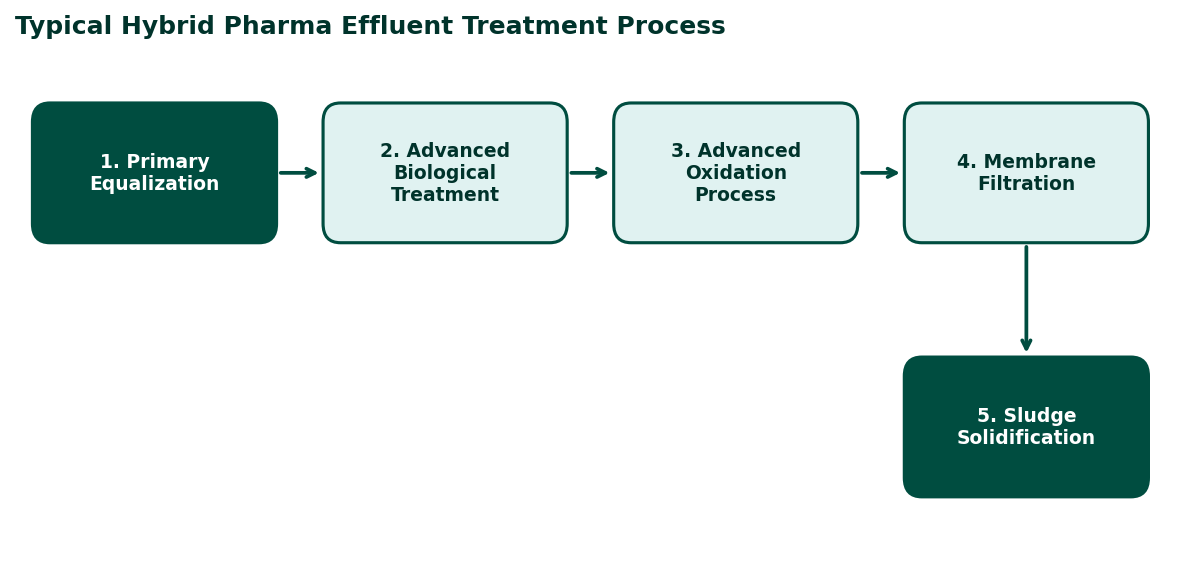
To achieve high to near-complete removal of hazardous contaminants, modern ETPs must utilize a hybrid treatment approach [7]. No single technology is sufficient on its own. Instead, a sustainable and cost-effective system must combine advanced biological treatment processes with membrane systems and advanced oxidation processes (AOPs), tailored specifically to the quality, quantity, and target pollutants of the facility's wastewater [7].
Advanced Biological Treatment: Aerobic Granular Sludge (AGS)
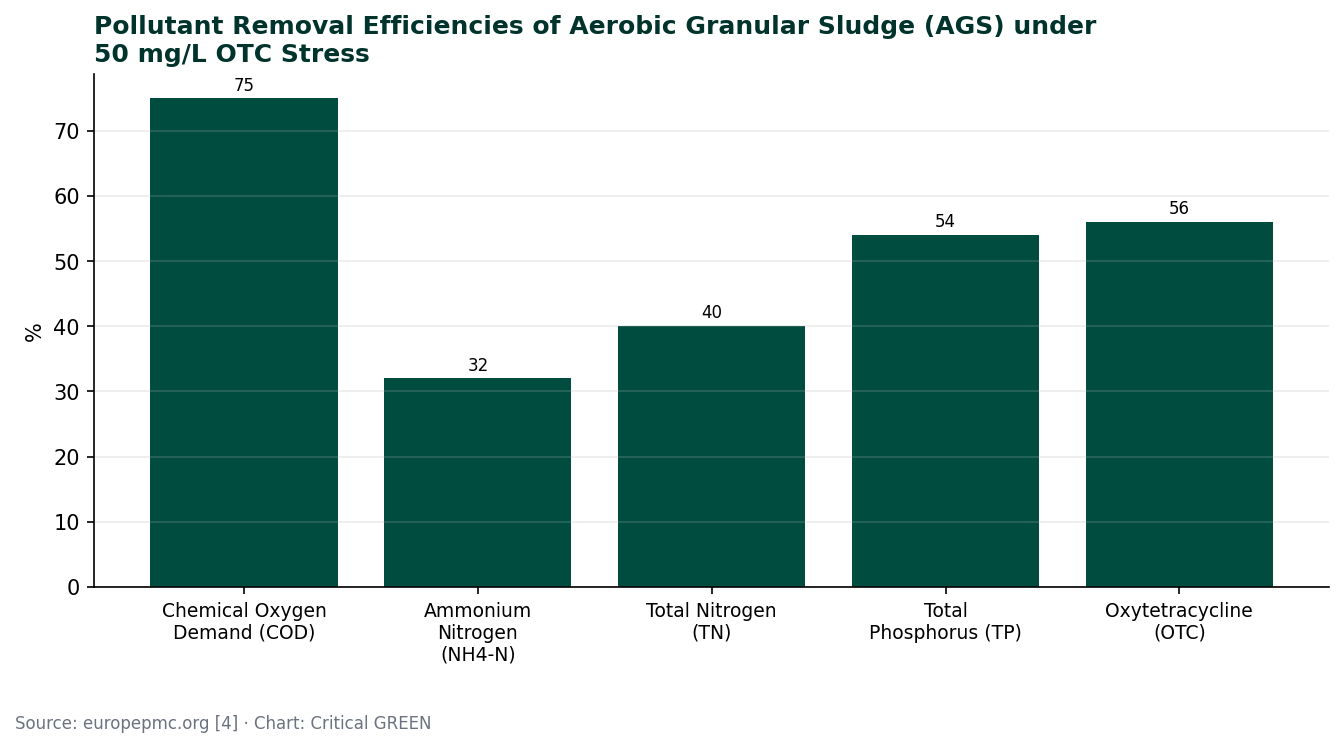
Aerobic Granular Sludge (AGS) represents a highly promising biological treatment technology for antibiotic-laden wastewater [4]. While high concentrations of antibiotics typically inhibit microbial activity, research demonstrates that AGS can adapt and thrive under extreme stress. In a long-term study investigating AGS performance under a high stress of 50 mg/L of oxytetracycline (OTC)—a concentration representative of raw pharmaceutical effluent—the AGS was successfully cultivated and granulated within 28 days [4].
Once mature, the AGS exhibited excellent settling performance, stable biological activity, and achieved robust pollutant removal efficiencies [4]: * Chemical Oxygen Demand (COD): 75% removal [4] * Ammonium Nitrogen (NH4-N): 32% removal [4] * Total Nitrogen (TN): 40% removal [4] * Total Phosphorus (TP): 54% removal [4] * Oxytetracycline (OTC): 56% removal [4]
Over time, the mechanism for OTC removal shifted from simple physical adsorption during the start-up phase to a highly efficient, synergistic adsorption-biodegradation process in the stable phase [4]. This adaptation was driven by a microbial community succession, where genera such as Saprochaete, Bordetella, and Raoultella became dominant, upregulating carbohydrate and amino acid metabolism to mitigate antibiotic stress [4].
Integrating Advanced Oxidation and Membranes
To polish the effluent and remove recalcitrant antibiotics like OTC, as well as other persistent pharmacophores, the biological stage must be coupled with Advanced Oxidation Processes (AOPs) such as Fenton oxidation, ozonation, or UV/H2O2 [3, 7]. AOPs generate highly reactive hydroxyl radicals that specifically target and degrade the persistent hydrophobic groups and hydrogen-bond acceptors in the R1 and R2 substituents of antibiotic molecules, effectively neutralizing their resistance-inducing potential [3]. Following AOP treatment, ultrafiltration or reverse osmosis membrane systems can be deployed to produce high-quality water suitable for process reuse, achieving a circular water economy.
Hazardous Sludge Management: Solidification and Stabilization
A critical, yet frequently overlooked, aspect of operating a pharmaceutical ETP is the management of the hazardous solid waste (sludge) generated during chemical coagulation and biological settling. This sludge often concentrates toxic heavy metals and organic residues, making direct land disposal an environmental hazard.
To safely manage this waste, the solidification/stabilization (S/S) technique is highly effective [1]. This process involves mixing the pharmaceutical ETP sludge with binders such as cement, lime, and bentonite, along with industrial additives like pulverized fuel ash (PFA), silica fume, and quarry rock dust [1].
This S/S matrix provides several key benefits: * Heavy Metal Immobilization: The optimized binder composition exhibits a strong fixing capacity, immobilizing toxic heavy metals including Copper (Cu), Zinc (Zn), Iron (Fe), Cobalt (Co), Lead (Pb), Nickel (Ni), and Cadmium (Cd) [1]. * Compressive Strength: The treated sludge mixtures easily achieve the target unconfined compressive strength of 0.3 N/mm2 required for safe landfill disposal [1]. * Resource Recovery: When properly formulated, the mixed-binder bricks are strong and durable enough to be recommended for external construction applications, such as the paving of pedestrian roads, transforming a hazardous waste stream into a useful building material [1].
Compliance and Engineering with Critical GREEN
For pharmaceutical manufacturers in Pakistan, compliance with the National Environmental Quality Standards (NEQS) is mandatory. Because environmental regulations and provincial EPA standards are subject to change, plant operators should always consult with provincial regulators (such as the Punjab EPA, Sindh EPA, or KP EPA) to ensure their discharge parameters align with the latest legal limits.
At Critical GREEN SMC (Pvt.) Ltd, we bring over a decade of engineering excellence to help you navigate these complexities. Founded in 2015, with our head office in Bani Gala, Islamabad, and offices in Lahore and Karachi, we offer a complete suite of environmental services, including Environmental Impact Assessments (IEE/EIA), water quality laboratory testing, and custom industrial effluent treatment design. Our engineering team is experienced in deploying advanced technologies—including UASB reactors, IC reactors, SBR, MBR, conventional activated sludge, and DAF/SAF flotation—tailored to the unique needs of the Pakistani pharmaceutical industry.
Don't let wastewater compliance threaten your operational continuity. Contact our engineering experts today via our Contact page to discuss your pharma effluent treatment plant design, upgrade, or laboratory testing requirements.
Frequently asked questions
Why do conventional ETPs fail to treat pharmaceutical wastewater effectively?
Conventional wastewater treatment plants are designed primarily to remove biodegradable organic matter (measured as COD/BOD) and suspended solids. They lack the specialized biological pathways, advanced oxidation steps, or membrane barriers required to degrade complex active pharmaceutical ingredients (APIs), antibiotics, and hormones, which often pass through the system untouched [7].
How does pharmaceutical wastewater contribute to the spread of superbugs?
When low levels of antibiotics (even as low as 25 µg/L) persist in wastewater, they expose resident bacteria to sub-lethal stress [3]. This drives genetic mutations, such as in the hisG gene, which can increase resistance to critical drugs like meropenem by up to 128-fold [3]. These resistant bacteria and their plasmids (like blaNDM) then multiply and spread into the environment [6].
What is Aerobic Granular Sludge (AGS) and can it handle high antibiotic concentrations?
AGS is an advanced biological treatment technology where bacteria form dense, fast-settling granules rather than loose flocs. Research shows that even under an ultra-high stress of 50 mg/L of oxytetracycline, AGS can be successfully cultivated within 28 days, achieving stable removal of COD (75%), nitrogen, phosphorus, and the antibiotic itself (56%) through a synergistic adsorption-biodegradation process [4].
How should pharmaceutical ETP sludge be safely disposed of?
Pharmaceutical ETP sludge is classified as hazardous waste due to concentrated heavy metals and chemical residues. It can be safely managed using Solidification and Stabilization (S/S) techniques, mixing the sludge with cement, lime, bentonite, and fly ash [1]. This immobilizes heavy metals (like Pb, Cd, and Ni) and achieves a compressive strength of 0.3 N/mm2, making it safe for landfill disposal or pedestrian road paving [1].
References
- Treatment of Hazardous Solid Waste Using Solidification and Stabilization Technique, American Journal of Environmental Protection, Science Publishing Group - doi.org, 2017. Accessed 24 September 2026.
- Evaluation of pharmaceutical industry wastewater for their cyto-genotoxic potential and oxidative stress induced by the waste. - pubmed.ncbi.nlm.nih.gov, 2025. Accessed 24 September 2026.
- Mutation-driven resistance development in wastewater E. coli upon low-level cephalosporins: Pharmacophore contribution and novel mechanism. - pubmed.ncbi.nlm.nih.gov, 2024. Accessed 24 September 2026.
- Long-term performance, granulation mechanism and microbial response of aerobic granular sludge for treating ultra-high concentration oxytetracycline-containing wastewater - europepmc.org, 2026. Accessed 24 September 2026.
- Neurotoxicity Assessment of Untreated and Vermifiltration-Treated Pharmaceutical Effluent Using Different Toxicity Biomarkers in Fish Channa punctata - europepmc.org, 2025. Accessed 24 September 2026.
- Molecular characterization of extended-spectrum β-lactamase (ESBL) and virulent genes in multidrug-resistant Escherichia coli isolated from pharmaceutical and environmental Wastewaters in Dhaka, Bangl - europepmc.org, 2026. Accessed 24 September 2026.
- Pharmaceutical Wastewater as an Emerging Environmental Contaminant: Sustainable Treatment Strategies and Future Perspectives - europepmc.org, 2026. Accessed 24 September 2026.
This article was researched and drafted by Critical GREEN's AI engineering assistant from the sources listed above and automatically fact-checked against them. Regulations and figures change - confirm current requirements with the relevant Environmental Protection Agency or talk to our engineers.